
Digital Navigation Best Practices
Best Practices
The NCDIT Office of Digital Opportunity has played a pivotal role in expanding access to digital resources and skills throughout North Carolina. As a driving force behind this work, we developed a statewide Digital Opportunity Plan (2024) emphasizing the importance of reliable internet connectivity, computer and device access, and the development of digital skills training for all North Carolina residents. This strategic effort aims to ensure that individuals and communities can fully engage with the digital world and benefit from the opportunities it provides.
Local digital navigation programs play a critical role in bringing this vision to life. These programs offer one-on-one, community-based support that helps residents overcome barriers to connectivity, develop digital skills, and connect to essential online services. Whether assisting with computer and device setup, job applications, telehealth appointments, or digital safety, digital navigators provide trusted, personalized support where it is needed most.
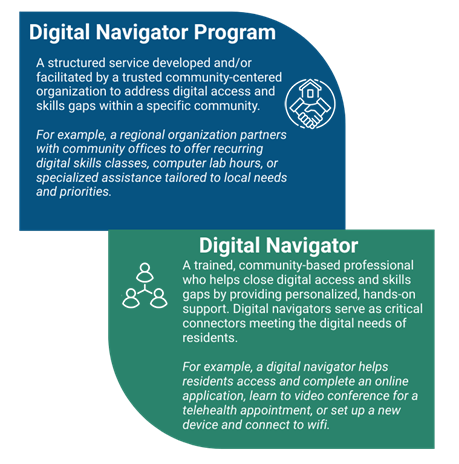
To support the development and sustainability of these efforts, the North Carolina Digital Navigation Best Practices offers guidance for both existing and emerging programs across the state. This resource draws from research, interviews, and direct input from state and community leaders to identify what is working and where communities need support. Within the document, you will find both best practices for digital navigation programs as well as best practices for individual digital navigators within the focus areas. These are distinguished by icons representing digital navigator programs and digital navigators. Each best practice also has actions, which break down concrete steps or practices that demonstrate the best practice in action.
Above all, this project recognizes that effective digital navigation is built from the ground up. Strong programs are shaped by the people and places they serve, guided by trusted relationships, and responsive to local priorities. This document is designed to support flexible implementation, allowing communities to develop and refine their efforts in ways that reflect their unique strengths, needs, and goals.
• Download the Digital Navigation Best Practices
• Get the Two-Pager of Focus Areas
All Focus Areas
The North Carolina Digital Navigator Best Practices highlight practices which have built success for digital navigators and digital navigation programs throughout the state. The focus areas are identified below.
Focus Area 1: North Carolina’s digital navigators are embedded within a trusted community-based organization.
1.1 Programs recruit digital navigators from the communities they serve.
1.2 Navigators build and maintain partnerships with local organizations, service providers, and institutions.
1.3 Navigators provide support aligned with the language and accessibility needs of the community.
Focus Area 2: Digital navigators are trained and equipped to provide digital opportunity services to their community, including staying up to date on local, state, national, and tribal resources available to support residents’ digital opportunity needs.
2.1 Program staff seek training and opportunities to support residents’ digital needs and build digital navigation capacity.
2.2 Programs maintain a current understanding of local, state, national and tribal resources for digital opportunity and seek resources to fill gaps as needed.
2.3 Navigators engage in networking to better understand the resources available to residents as well as to advocate for the needs of their community.
2.4 Navigators are deeply connected to their communities to understand the landscape of resources and issues facing all residents.
2.5 Navigators are focused on serving residents with empathy and high levels of customer service.
Focus Area 3: Digital navigators reliably assess client needs and goals and offer tailored solutions and courses of action to meet digital opportunity needs.
3.1 Programs assess effectiveness through reflection and evaluation and consistently evaluate the needs of residents to ensure programs are in line with goals for residents and the community.
3.2 Navigators design resident-centered programs aimed at meeting people where they are and growing their skills.
3.3 Navigators provide digital skills support for residents without access to training and skills.
Focus Area 4: Digital navigators create opportunities for input and feedback to address local needs and improve program outcomes.
4.1 Programs identify digital barriers and tailor approaches based on the needs of specific areas and populations.
4.2 Programs make visible the importance of digital skills and computer, device and internet access for all residents.
4.3 Navigators understand their communities and adapt their services to meet shifting needs of residents.
Focus Area 5: Digital navigators collect, document, and manage information about services provided during interactions with community members.
5.1 Programs use a data management processes to track digital navigator interactions with community members.
5.2 Navigators collect and manage data about community members, such as the different skill levels and needs of individuals seeking support.
5.3 Navigators utilize data and information about their communities to adjust instruction to fit the unique needs of their community.
Focus Area 6: Digital navigators develop critical skills and abilities to enhance the services provided to residents of their community.
6.1 Programs support the professional development of their digital navigators to ensure continued growth of knowledge and skills addressing the needs of residents.
6.2 Programs develop or support critical skills for digital navigators with various levels of experience.
6.3 Navigators prioritize professional learning to enhance programming for residents and expand their professional network.